Learn More

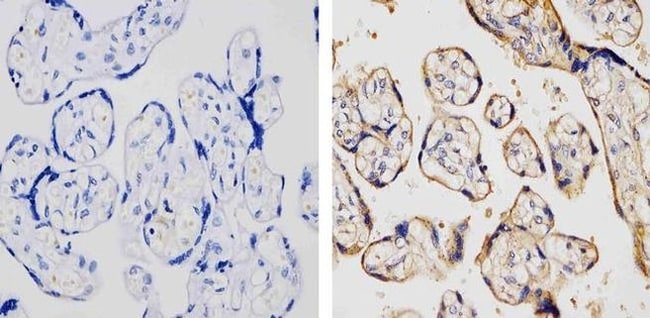
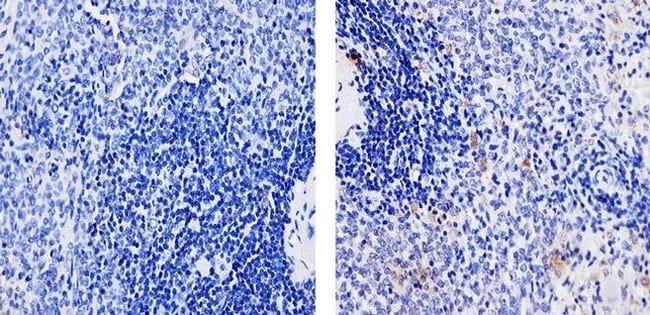
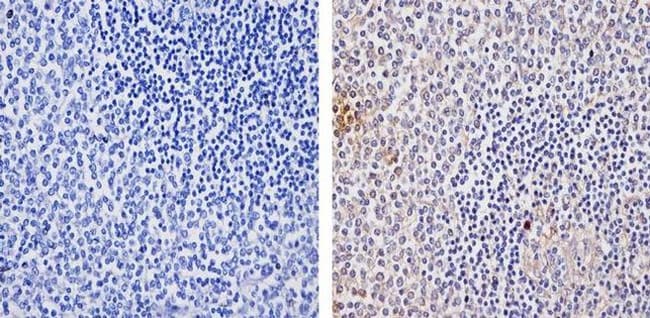

Invitrogen™ TLR4 Recombinant Superclonal™ Antibody (20HCLC)
Descripción
Recombinant rabbit Superclonal™ antibodies are unique offerings from Thermo Fisher Scientific. They are comprised of a selection of multiple different recombinant monoclonal antibodies, providing the best of both worlds - the sensitivity of polyclonal antibodies with the specificity of monoclonal antibodies - all delivered with the consistency only found in a recombinant antibody. While functionally the same as a polyclonal antibody - recognizing multiple epitope sites on the target and producing higher detection sensitivity for low abundance targets - a recombinant rabbit Superclonal™ antibody has a known mixture of light and heavy chains. The exact population can be produced in every lot, circumventing the biological variability typically associated with polyclonal antibody production. Note: Formerly called 'Recombinant polyclonal antibody', this product is now rebranded as 'Recombinant Superclonal™ antibody'. The physical product and the performance remain unchanged.

Spezifikation
Spezifikation
| Antígeno | TLR4 |
| Aplicaciones | Immunohistochemistry (Paraffin), Western Blot, Immunocytochemistry |
| Clasificación | Recombinant Superclonal |
| Clon | 20HCLC |
| Concentración | 0.5 mg/mL |
| Conjugado | Unconjugated |
| Formulación | PBS with 0.09% sodium azide |
| génica | TLR4 |
| N.º de referencia del gen | O00206, Q9QUK6 |
| Alias de gen | ARMD10; CD284; EGK_07381; homolog of Drosophila toll; hToll; lipopolysaccharide response; Lps; Ly87; Ran/M1; Rasl2-8; Tlr4; TLR-4; TOLL; toll like receptor 4; toll/interleukin-l receptor (TIR) domain; toll4; toll-like receptor 4; toll-like receptor 4 immunity-related protein; Toll-like receptor 4-like protein; Toll-like receptor4 protein |
| Mehr anzeigen |
Indem Sie auf Absenden klicken, erklären Sie sich damit einverstanden, dass Fisher Scientific sich mit Ihnen in Verbindung setzen kann, um Ihr Feedback in diesem Formular zu bearbeiten. Wir werden Ihre Informationen nicht für andere Zwecke weitergeben. Alle bereitgestellten Kontaktinformationen werden in Übereinstimmung mit unserer Datenschutzrichtlinie aufbewahrt. Datenschutzrichtlinie.